
When you're ready to put a wipe on the shelf, "low MOQ" sounds reassuring until you ask what that actually means in units. Vague promises don't help you plan inventory, cash, or a launch calendar. You need a starting point you can plan around, worded honestly, with clear caveats about what can raise the floor.
We're Rebel Converting, a family-owned wet wipe manufacturer in Milwaukee and Saukville, Wisconsin. We work with startups and growing brands on first runs regularly. This post shares the trial-run starting ranges we can stand behind today, explains what those ranges depend on, and gives you a short checklist for comparing quotes focused on minimums. For the fuller MOQ and landed-cost breakdown, see our guide to private label wet wipes MOQ.
Why Trial Runs Matter More Than a Single MOQ Number
A wet wipe trial run is a first production quantity meant to prove the product, packaging, and supply chain before you scale. It is not the same as a national-chain replenishment order, and it shouldn't be priced or planned that way.
Most brands care about three things at this stage:
- Cash at risk: How much inventory do you have to buy before you know sell-through?
- Retail readiness: Can the pack look finished enough for a pilot shelf or early ecommerce photos?
- Reorder path: If the trial works, can you scale without rebuilding the product from scratch?
That's why we talk about starting ranges by format, not one universal minimum. Packaging, fabric availability, and the solution all move the number.
Starting Ranges We Can Stand Behind (With Caveats)
These are starting points for discussion, not guarantees. Final minimums are confirmed once your specs, materials, and formula path are defined.
In-Mold Labeled (IML) Canisters
For trial runs on in-mold labeled canisters, we can often start as low as about 1,500 units (eaches). Digital IML helps here because branded containers can be produced without traditional plate charges, which makes a short branded run more practical for a first order. You can read more about how IML works on our in-mold labeling overview and on our industry innovation page.
That 1,500 figure is a trial-run starting point. It can move up if the fabric isn't on hand, if a vendor's minimum purchase quantity (MOPQ) forces a larger material buy, or if the solution needs specialty chemicals brought in for blending.
Dry Rolls
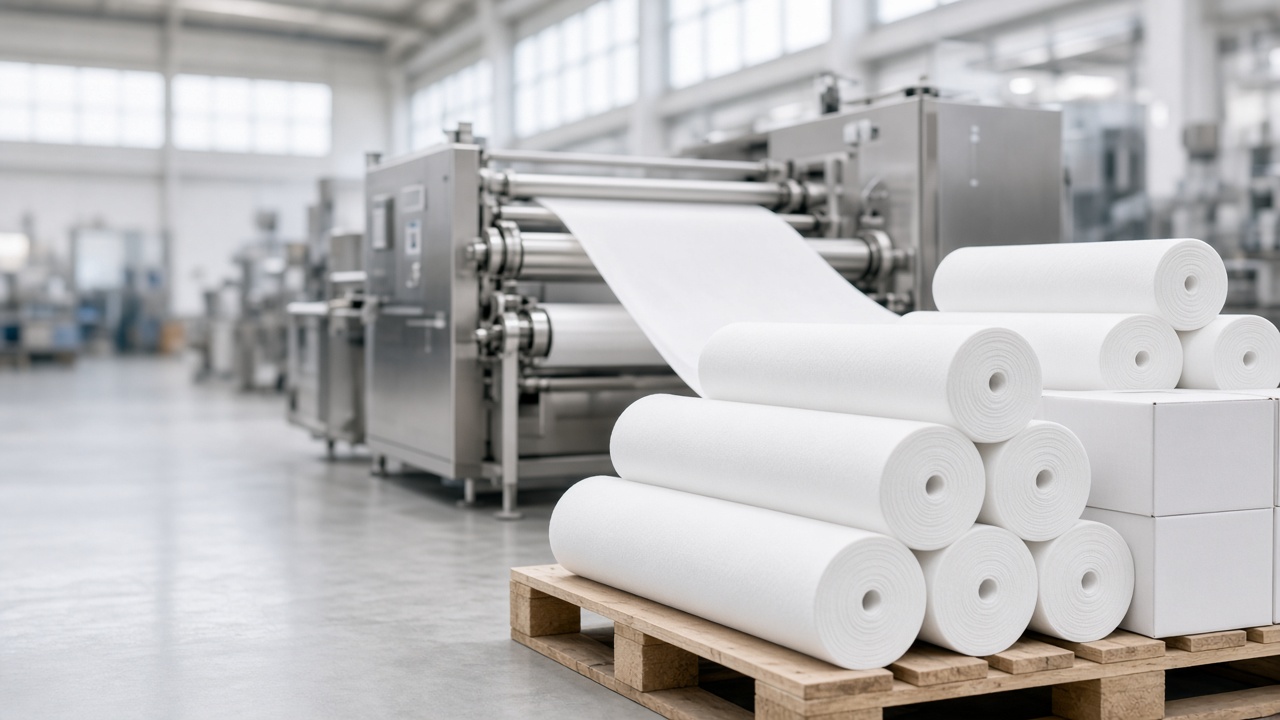
For dry rolls, trial runs can start at as little as a few skids, again depending on fabric availability and supplier minimums. Dry rolls are a strong path when you want converting flexibility, private label options, or a simpler first step before a fully wet finished program. Learn more on our dry rolls page.
"A few skids" is intentionally qualitative. Skid counts vary with roll size, coreless configuration, and how the order is palletized, so we confirm the practical quantity once your dry-roll specs are set.
What Moves a Trial-Run Minimum Up or Down
Client conversations often land on the same three drivers. Understanding them early saves time when you compare quotes.
1. Fabric in Stock
If we already have the nonwoven fabric your program needs, a trial run can stay closer to the starting range. If the substrate has to be ordered specially, the vendor's purchase minimum can become the real floor, even when our converting capacity would allow a smaller finished-goods run.
2. Vendor Minimum Purchase Quantities (MOPQs)
Our material partners have their own MOPQs. Those can apply to fabric, packaging components, or ingredients. When a trial depends on bringing something in specifically for your project, that upstream minimum often shapes what we can responsibly quote.
3. The Solution (Formula)
The wipe solution matters as much as the wipe itself. Programs that use an existing or in-stock formula can often keep runs smaller. Custom-blended formulas that require chemicals to be brought in typically carry higher minimums, because batch sizing and ingredient procurement have to make sense before production starts. Our custom blending services cover running a formula you already own, refining one, or developing a new one with our chemists.
In short: in-stock materials and established formulas support smaller trial runs. Specialty fabrics, specialty chemicals, and new blends usually raise the floor.
How to Keep a First Run Practical
A few planning choices help small brands stay closer to trial-friendly quantities:
- Start with one SKU. Multiple scents, sizes, or label designs in the first order can raise the effective minimum per version.
- Prefer formats built for short runs. IML canisters are one of the formats where our trial-run starting point is clearest.
- Ask early about fabric and formula path. Knowing whether materials are on hand (or must be ordered) prevents surprises after you've already planned launch volume.
- Separate "nice to have" from "must have" for v1. Specialty substrates or complex chemistries can wait until sell-through supports them.
- Plan the reorder, not just the trial. A good first run should leave you with a clear path to scale through private label wet wipes or broader production support.
If you're still mapping what to ask any manufacturer before you commit, our checklist on what to ask a wet wipe contract manufacturer before you sign pairs well with the questions below.
A Short Checklist for Comparing Quotes on Minimums and Trial Runs
Use this when the decision hinges on how small (and how honest) the first run can be. For the full apples-to-apples quote framework, including landed cost and overseas comparisons, use the private label wet wipes MOQ guide.
- What is the trial-run minimum for my exact format? Ask for the number in finished units or skids, tied to canister, pouch, dry roll, or another format you actually want.
- What is setting that minimum? Fabric, packaging, formula batch size, or a vendor MOPQ? If the answer is vague, dig in.
- Are materials on hand, or special-order? In-stock fabric and components usually support smaller starts than made-to-order ones.
- Is the formula existing, or does it require chemicals brought in? Custom blends that need new ingredients typically raise MOQs compared with established formulas.
- What changes on reorder? Confirm whether the next order can scale smoothly, and whether any trial-only constraints disappear once materials are established.
- Are setup or decoration charges separate? For branded canisters, ask whether digital IML avoids plate charges and how artwork changes are handled between runs.
Laying those answers side by side usually shows which quote is truly startup-friendly, and which one only looks small until materials and formula are specified.
Frequently Asked Questions
What is a wet wipe trial run?
A trial run is a first production quantity meant to validate product, packaging, and demand before larger replenishment orders. At Rebel, trial-run starting points depend on format, materials on hand, vendor MOPQs, and the solution.
How low can an IML canister trial run start?
For in-mold labeled canisters, trial runs can start as low as about 1,500 units (eaches). That is a starting point, not a guarantee, and it depends on fabric availability, supplier minimum purchase quantities, and the formula path.
How small can a dry roll trial be?
Dry roll trial runs can start at as little as a few skids, subject to the same material and vendor constraints. We confirm the practical quantity once roll specs are defined.
Why do custom formulas raise the minimum?
When a formula requires chemicals to be brought in for blending, batch sizing and ingredient procurement usually push the MOQ higher. Existing or in-stock formulas can help keep a first run smaller.
Is a US trial run worth it versus an overseas low MOQ quote?
Often yes for startups, because domestic production can shorten sampling cycles and avoid some landed-cost surprises. For a deeper comparison, see our guide to US vs. offshore wet wipe manufacturing.
Ready to Scope a First Run?
If you're planning a launch and want a realistic trial quantity, not a vague "low MOQ" promise, reach out to our team in Wisconsin. Share your format, target unit count, and whether you already have a formula. We'll tell you what a first run can look like with us, what might raise the floor, and how wet wipe contract manufacturing would work from sample through reorder.