Wet Wipe Manufacturing, Start to Finish
Every wet wipe starts as two separate things: a dry roll of nonwoven fabric the size of an industrial spool, and a liquid solution blended to do a specific job. Wet wipe manufacturing is everything that happens to bring them together converting, folding, saturating, cutting, filling, and sealing at speeds measured in thousands of wipes per minute.
Rebel Converting has been doing exactly that in Wisconsin since 2012. This page is a walk through how our wet wipes production actually works: the equipment, the chemistry, the capacity, and the quality systems behind more than 2 billion square yards of substrate converted every year.
The Wet Wipe Manufacturing Process
Step 1. Substrate selection
The wipe itself is a nonwoven fabric, and choosing it is the first engineering decision: spunlace for softness and strength, plant-based and tree-free options like bamboo, hemp, and organic cotton for plastic-free products, heavier weights for industrial scrubbing, lighter for personal care. Every substrate we run originates in the USA - no ocean freight in the supply chain, no overseas quality variables.
Step 2. Solution blending
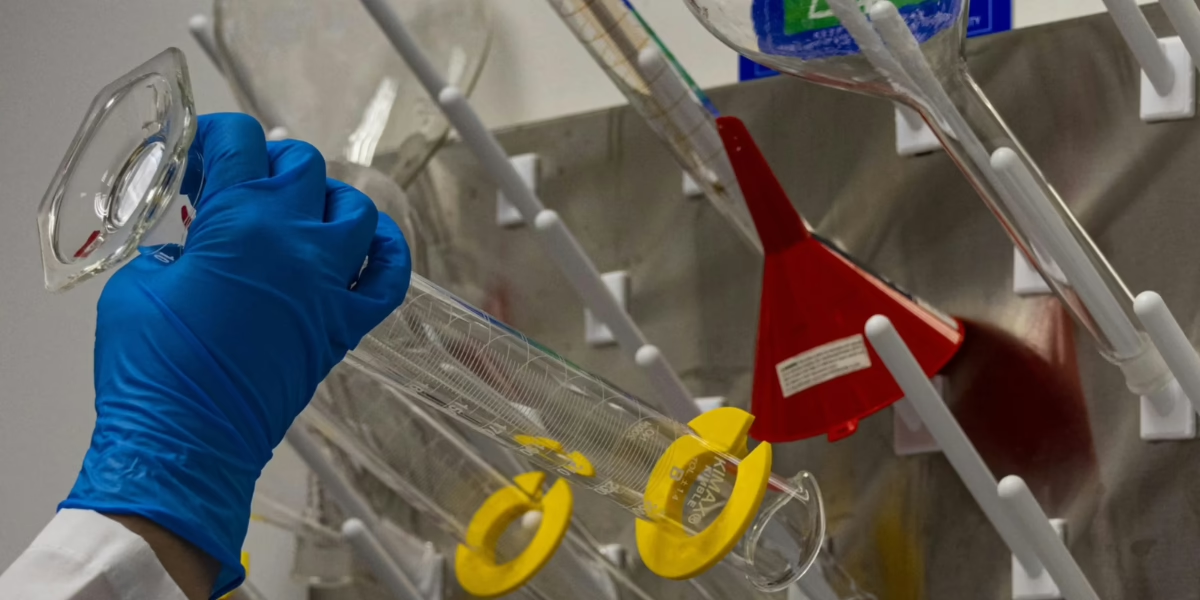
Most wipes are 80–95% liquid by weight, which means the chemistry is the product. Our in-house labs blend solutions across the pH spectrum antimicrobials, emulsions, hypoallergenic and fragrance-free formulas, even hazardous-material blends under CGMP standards, in the same facilities where the wipes are made. No third-party compounder, no formula handoffs, no waiting.
Step 3. Converting, perforating, and folding
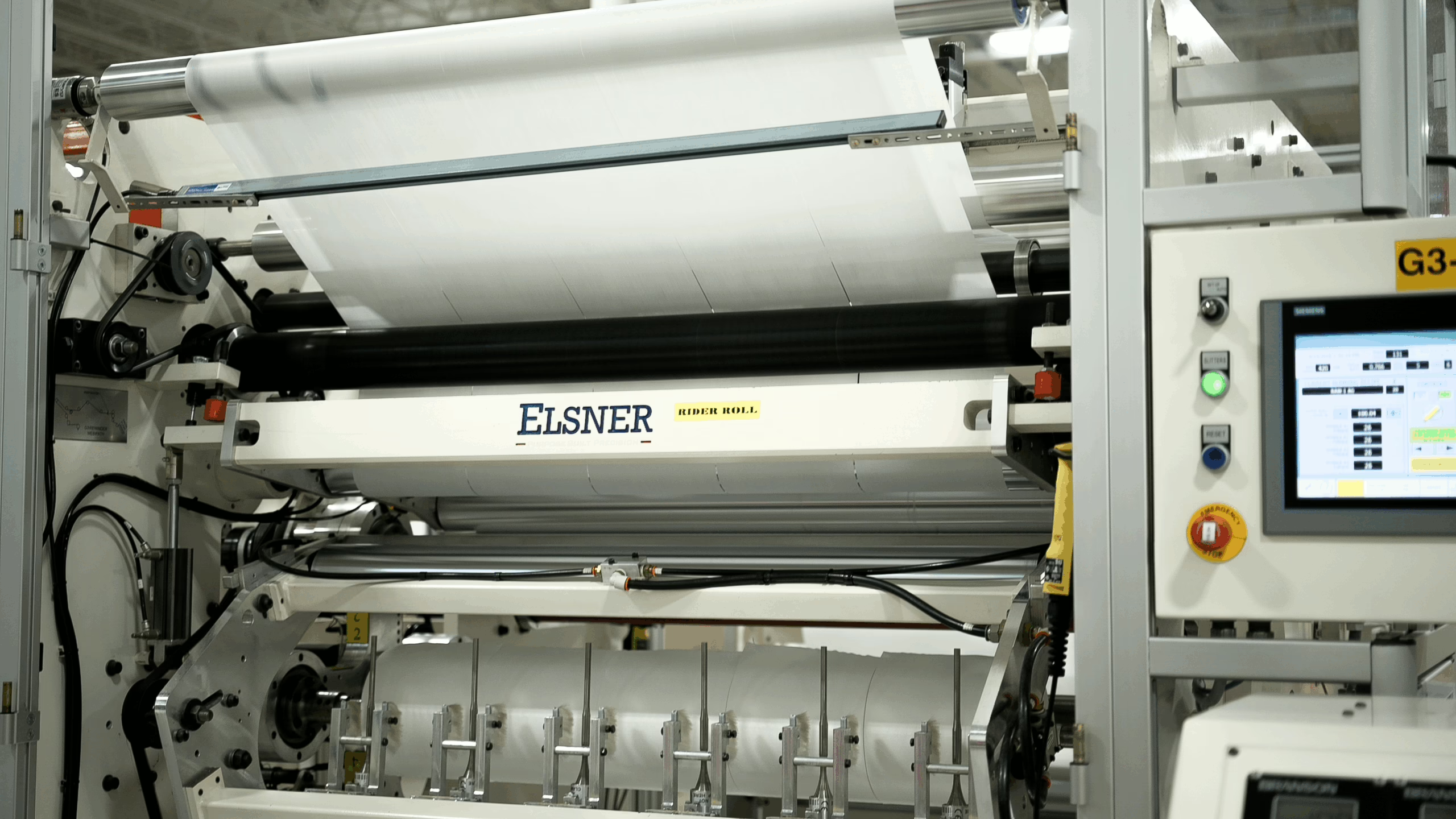
This is where Rebel's equipment does things most wipe manufacturers can't. Our customized converting lines and proprietary folding plows produce large-fold wipes and hi-count rolls that fit more usable sheet into the same canister and our coreless roll process (a format we pioneered) eliminates the cardboard tube entirely, improving fluid distribution from first wipe to last.
Step 4. Saturation and filling
Precision matters here: too little solution and the last wipes come out dry; too much and the first ones drip. Our lines meter solution to the substrate's exact absorption profile, then fill into the format the product calls for rigid canisters from pocket-size to five-gallon pails, flexible refill pouches, flow packs, and sachets.
Step 5. Quality release
Every batch passes through our chemistry laboratory's testing protocols before it ships solution verification, saturation checks, seal integrity, and the documentation regulated products require. For FDA OTC products, EPA-registered disinfectants, and medical device wipes, quality release is a regulatory event, not a formality.
Two Plants, One Standard
Wet wipes manufacturing runs at Rebel across two Wisconsin facilities; our Milwaukee headquarters and our Saukville plant, thirty minutes apart and running matching customized equipment. That redundancy is deliberate: maintenance on one line never stops production, demand spikes have somewhere to go, and the brands we produce for get supply-chain resilience built in rather than bolted on.
Combined capacity exceeds 2 billion square yards of converting annually enough range to run a startup's first pallet and a national program on the same floor.
What Makes a Good Wipes Manufacturer
Having toured plenty of buyers through our plants, we'd argue any wipes manufacturer worth your consideration should be able to show you five things: where their raw materials come from (ours: 100% USA-origin), whether chemistry happens in-house or gets outsourced (in-house, under CGMP), who owns the formulas (our customers do), what happens when a line goes down (the other plant picks it up), and whether you can walk the floor (please do, we're in Milwaukee and Saukville, WI, and we like visitors).
H2: Formats and Capabilities at a Glance
Wipe formats: canister wipes (cored and coreless), large-fold, hi-count rolls, bulk dry rolls and fill-your-own canisters for companies that add their own chemistry. Packaging: rigid canisters, in-mold labeled buckets with photo-quality graphics at low minimums, refill pouches using 96% less plastic, flow packs, sachets. Product classes: hygienic, industrial, and FDA/EPA-regulated wipes including OTC, disinfectant, and medical device categories. Substrates: conventional spunlace through plant-based, biodegradable, and tree-free options.
Common Questions About Wet Wipe Manufacturing
Where are Rebel's wipes manufactured? Entirely in Wisconsin, USA at our Milwaukee headquarters and our Saukville facility. Raw materials are 100% USA-origin as well, so the whole supply chain lives on one continent.
What's the minimum run for wet wipes production? Lower than most people expect. Our low-minimum options especially in-mold labeled canisters and buckets exist specifically so growing brands don't need national-brand volumes to get professional-grade product.
Can a wet wipes manufacturer use my existing formula? Yes. We can run your formula as-is, optimize it in our labs, or develop a comparable solution you'll own outright. Formula ownership stays with you either way we put that in writing.
How long does wet wipe manufacturing take from order to delivery? It depends on regulatory status and packaging complexity, but with substrate, chemistry, converting, and filling all under one roof, our timelines are measured in weeks and we'll give you an honest one up front.
Put This Capacity to Work
If you've read this far, you're probably not curious about wipes you're planning a product. The next step is our wet wipe contract manufacturing services page, or skip the reading and talk to the people who run these lines: (262) 235-4224, Milwaukee & Saukville, Wisconsin.